
A meditation space at home can seriously change the vibe of your daily routine. Having a little corner to unwind, breathe, or just sit quietly is pretty handy, especially with all the distractions in a busy home. I’ve found that even a small, intentional space can make mindfulness practices more accessible and enjoyable. I want to walk you through everything you need to design a meditation space that feels calm, welcoming, and personal to you.
Why a Home Meditation Space Matters
Meditation is getting more popular as people look for ways to manage stress, improve focus, and add calm to their day. Having a dedicated meditation space at home is helpful because it acts as a visual reminder and invites you to slow down, even for just five minutes. Studies show that mindfulness routines stick better when you have a set space for them. Just like you wouldn’t try to cook on your bed, having separate zones for different activities helps train your mind to switch gears and relax.
Creating your own spot feels different than using a multipurpose area. I’ve noticed that simply seeing my meditation cushion signals my brain that it’s time to relax, which is a great trigger. That’s pretty powerful, especially if you mix meditation with things like yoga, breathing exercises, or just moments of quiet. You’re building a mini oasis away from the bustle of daily life, a sanctuary for restoration and focus.
How to Pick the Right Spot in Your Home
The location of your meditation space plays a big part in how much you’ll use it. You don’t need a spare room. Plenty of people make use of alcoves, corners, or even the space under a window. Here are a few tips for choosing your spot:
- Quiet areas: Spots away from high-traffic paths and noisy appliances are ideal. Think about early morning or late evening times when the house is quieter.
- Natural light: If possible, pick a place near a window. Natural light feels comforting and helps set the tone for mindfulness.
- Consistent spot: Using the same space regularly can create a nice ritual and make your practice more consistent.
For apartments or shared homes, privacy can be tough. Using a folding screen, curtain, or even some plants as a barrier can work wonders for creating a little separation from the rest of the household buzz. If privacy’s still hard to come by, don’t stress. Earplugs or headphones can help tone down background noise and boost your focus.
What to Include in Your Home Meditation Space
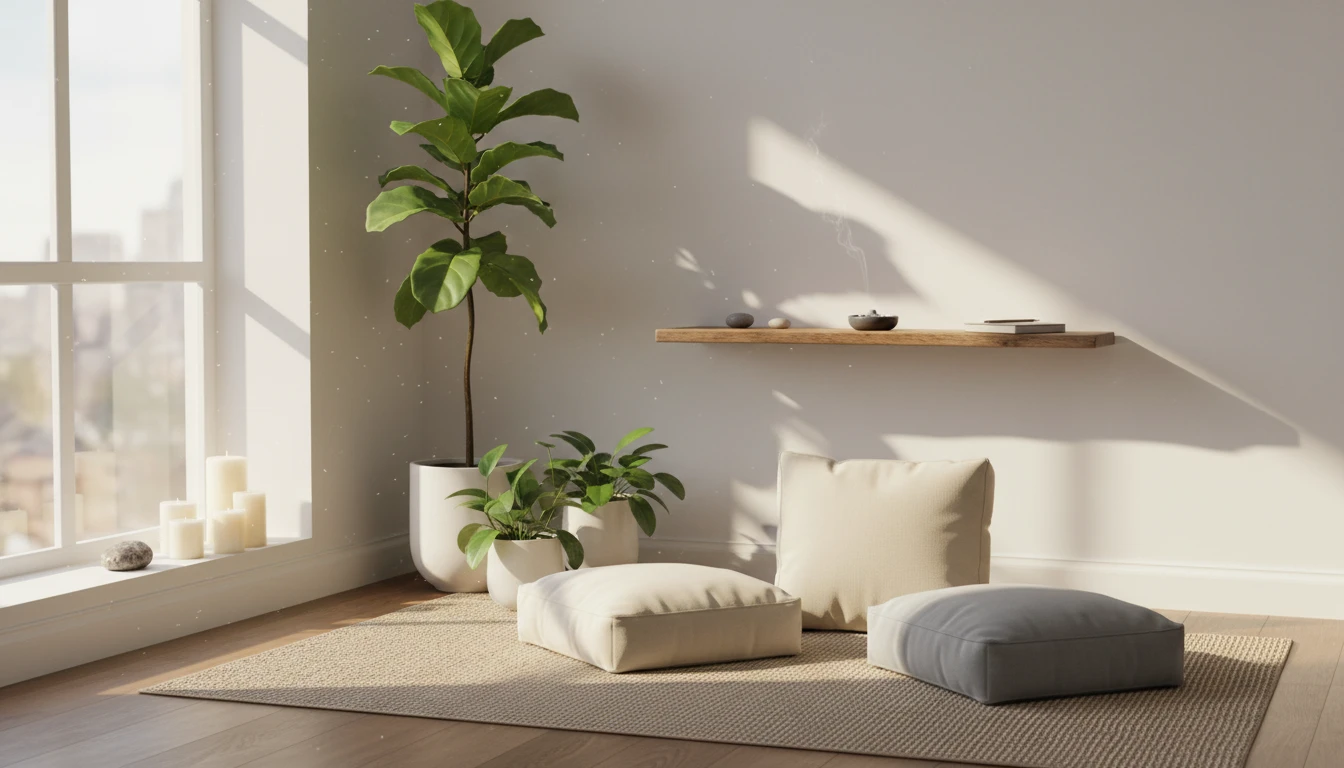
A meditation corner doesn’t need much. The idea is to keep things simple, uncluttered, and inviting. Here’s a quick rundown of some basics I think help create the right vibe:
- Cushion, mat, or chair: Comfort is really important. Lots of folks use a soft cushion, yoga mat, or a comfy chair to support good posture.
- Blankets or throws: Staying cozy makes it easier to focus, and I always keep a blanket nearby in case I get chilly.
- Lighting: Soft natural light works great. If that’s not possible, a small lamp or some string lights make the space feel warm and relaxing.
- Plants or flowers: A splash of greenery brings some life to the area and can boost your mood.
- Incense, candles, or diffusers: Scent can really help set the atmosphere. I go for gentle, calming fragrances, so nothing feels overwhelming. Battery candles also work if real flames aren’t an option.
- Small table or shelf: If you like, add a little table for things like an affirmation card, a journal, or a bell. It keeps the area organized and gives you a place for small items that support your practice.
Only include items that make you feel calm or happy. It’s better to have just a few meaningful things rather than cluttering up the space. Some people add water features or calming stones, which can bring a gentle, soothing element if you have the room and budget.
Personalizing Your Meditation Space
Your meditation space doesn’t have to look like anyone else’s. Personal touches are what make the space inviting. Here are some ideas I’ve used or seen in others’ homes:
- Art or images: Hanging a piece of art or a photo you love gives the area personality without making it too busy.
- Sound: A small speaker for music or nature sounds, or a bell you ring before sitting. Gentle sounds can help signal the start and end of your session.
- Spiritual items: Some people add crystals, statues, or mala beads if those are meaningful for their practice, but it’s totally up to you.
- Journaling supplies: I like to keep a simple notebook close for jotting down insights or gratitude right after meditation.
Change things up occasionally with seasonal touches like fresh flowers, new art, or a different candle scent. This keeps the space feeling special but doesn’t disrupt its calming purpose. Even changing your seating arrangement or switching the direction you face can help renew your experience.
Tips for Setting Up a Soothing Atmosphere
The atmosphere can make or break how welcoming a meditation space feels. Simple changes go a long way:
- Declutter: Removing visual clutter helps the mind settle. If the area tends to collect junk, try a small basket for quick cleanups.
- Scent and sound: I always notice that a subtle scent and quiet background sounds can do wonders. Just avoid anything too strong or distracting.
- Temperature: Comfort is really important, especially if you plan to sit for a while. Make sure the area isn’t drafty or too warm.
If you live somewhere noisy, earplugs or noisecanceling headphones with gentle soundtracks might work. There are dozens of meditation playlists and apps out there, so finding one you like is pretty straightforward. Some people also add textured rugs or mats to help the space feel more grounded and distinct from the rest of the home.
Easy Steps to Get Your Meditation Space Ready
- Pick your spot: Choose a part of your home that feels quiet and private.
- Clear the area: Move anything out of the way that doesn’t fit the mood. This could mean clearing a corner of the living room or tidying up a windowsill.
- Set down your base: Add a cushion, mat, or chair so you’re comfortable right away.
- Add cozy layers: Bring in a blanket or pillow for extra comfort.
- Light it right: Open curtains, set up a lamp, or add string lights until the glow feels soft but bright enough to stay alert.
- Add personal accents: Place a plant, some art, or a scented candle nearby, but not so close they distract you.
This setup can take as little as ten minutes, or you can slowly add new touches as you figure out what truly makes you feel calm. The most important thing is to keep the process fun and stressfree. Test your setup by doing a short meditation session; adjust as needed until the space really brings you peace.
Common Mistakes and How to Avoid Them
- Making the setup too complicated: More stuff doesn’t mean more relaxing. Aim for just a few elements that feel good to you.
- Trying to make it “Insta perfect”: The space is for you, not social media. Comfort and calm matter more than looks.
- Neglecting comfort: Sitting on a hard floor gets old fast. Try out different seats or add layers as needed.
- Skipping regular upkeep: Take a minute now and then to tidy your space so it keeps feeling fresh and welcoming.
Focus on how the space supports your practice first, then tweak little by little to get things just right for your taste. Don’t worry about whether it matches a magazine photo—listen to what actually helps you settle and relax.
Practical Examples: Everyday Meditation Space Setups
- Minimalist window nook: Just a cushion, a small plant on the sill, and the natural light flowing in. No frills but super peaceful.
- Multipurpose corner: In apartments, some folks use stackable cushions or a storage basket that tucks away when not in use. Great for shared spaces!
- Natureinspired zone: Grouping a few houseplants, a wooden incense holder, and an earthtoned mat is an easy way to bring the outdoors in.
You don’t need a giant home or a big budget to create something that feels special. The key thing is that your meditation space signals peace and calm, however simple it looks. Over time, you’ll look forward to spending even a few quiet minutes in your personal spot.
Frequently Asked Questions
What if I don’t have much space?
A small corner, the end of a hallway, or even a closet shelf can work. Pick a spot you can consistently return to, and make it as comfortable as possible.
Does my meditation space need to be completely silent?
Absolute silence is rare, especially in shared homes or apartments. Use gentle sounds, calming music, or noisecanceling options if needed.
How often should I use my meditation space?
There are no rules. Daily is great, but even a couple of short sessions a week helps. Having the space ready means you’re more likely to use it, even for a quick midday breather.
What type of scent works best for a meditation space?
Light, natural scents like lavender, sandalwood, or eucalyptus are popular. Use incense, candles, or diffusers, and always keep ventilation in mind.
Closing Thoughts
Setting up a meditation space at home doesn’t have to be complicated or expensive. Focus on finding a quiet spot, keep it comfortable, and let personal touches make it inviting. The main idea is to create a space that supports your calm and helps you build a regular meditation practice, no matter your setup or lifestyle. With a little intention and creativity, your meditation zone will soon become your new favourite corner of the house. You may even notice benefits in other areas of your life, like increased patience or sharper focus, thanks to your new habit of daily mindful moments.